/filters:format(jpeg,png)/fit-in/300x300/guide_websites/182861/images/1787627663117stripsetflyfishing.jpg)
/filters:format(jpeg,png)/fit-in/237x80/guide_websites/182861/images/1787627663117stripsetflyfishing.jpg)
Beach Fishing with Purple Lure in San Francisco
Coastal Fishing in San Francisco - What to Expect
%2F%2Fusers%2F0cd9a88c-b52d-4c74-8a1b-07efaccf5e7a%2Fimages%2Ffish-caught-purple-lure-beach-2736.jpg&w=1920&q=75)
Fishing Charter by Captain Spencer Johnson in August
Meet your Captain Spencer Johnson
- San Francisco Surf & Bay Fly Fishing Guide


Summary
Experience a fishing charter in San Francisco on Thursday, August with Captain Spencer Johnson of Strip Set Fly Fishing Adventures. This coastal fishing experience showcases the techniques and conditions that make beach fishing productive in the Bay Area, from lure selection to water reading.
Fishing Charter with Captain Spencer Johnson - Rates & Booking
Captain Spencer Johnson of Strip Set Fly Fishing Adventures operates fishing charters out of the El Cerrito and San Francisco area on Thursday, August. To inquire about availability, rates, and booking your fishing experience, contact Strip Set Fly Fishing Adventures directly for current pricing and package details.
Highlights of Beach Fishing
Beach fishing in the San Francisco area offers diverse opportunities for anglers targeting coastal species. The shallow waters and sandy bottom structure create ideal conditions for fish to hunt and feed, making lure presentations highly effective. Success depends on understanding water temperature, tide movement, and seasonal patterns that influence fish behavior along the coast.
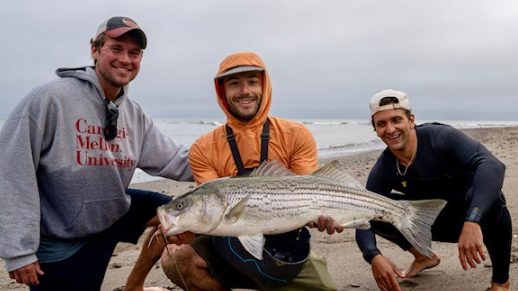
Lure selection plays a critical role in beach fishing success. Purple lures, like the one shown in this catch, attract fish through color contrast and light reflection in water. The choice of lure color often depends on water clarity and light conditions - bright colors work well in murky water or low light, while more natural tones suit clear conditions. This particular catch demonstrates the effectiveness of matching your lure choice to local conditions.
On the Water Experience
Beach fishing requires reading the water environment to locate fish. Anglers look for structure like drop-offs, channels through sandbars, and areas where currents create feeding zones. The San Francisco coastal waters present varied conditions throughout the day as tides shift and water temperature changes.
Understanding fish feeding patterns is essential for productive fishing. Fish position themselves where currents deliver food and where they can ambush prey with minimal energy expenditure. By identifying these zones and presenting lures effectively, anglers increase their chances of connections. The visual confirmation of a successful catch - like the fish in this image - comes from reading these environmental signals and executing proper presentation technique.
Coastal fishing also teaches anglers about seasonal movements and species behavior. Fish respond to water temperature changes, light intensity, and food availability. During different seasons, species position themselves at varying depths and locations. This knowledge helps guide decisions about where to focus effort and what techniques to employ.
The experience of beach fishing combines technical skill with environmental awareness. Success requires patience, observation, and willingness to adjust tactics based on what the water is telling you. Each outing provides opportunities to learn new details about how local fish respond to different conditions and presentations.