/filters:format(jpeg,png)/fit-in/300x300/guide_websites/182861/images/1787627663117stripsetflyfishing.jpg)
/filters:format(jpeg,png)/fit-in/237x80/guide_websites/182861/images/1787627663117stripsetflyfishing.jpg)
Fishing at Ocean Beach San Francisco: What You Can Catch and When to Go
%2Ffit-in%2F1000x1000%2Ffilters%3Aformat(webp)%2Fguide_websites%2F182861%2Fimages%2F1787624498324one-on-one-fly-casting-instruction-bay-area3.jpg&w=1920&q=75)
Published: September 15, 2026
Stretching for over three miles along the western edge of the city, the expansive, fog-swept coastline of the Pacific Ocean presents one of the most raw and powerful natural environments in Northern California. For the everyday tourist, this immense stretch of sand offers scenic views, bracing sea breezes, and the rhythmic sound of crashing waves. However, for the dedicated angler, this wild coastline represents an extraordinary, dynamic arena. The churning waters here are teeming with marine life, offering a truly exceptional saltwater angling experience that tests your physical endurance, your patience, and your ability to read the water.
Tackling the surf requires a completely different mindset than casting into a tranquil freshwater lake or dropping a line from a sheltered pier. The Pacific swell is relentless, the onshore winds can be punishing, and the underwater landscape is constantly shifting. Yet, the reward of successfully extracting a powerful marine predator from the heavy wash is unmatched. Engaging in beach fishing San Francisco style places you intimately within the elements, challenging you to decode the natural signs of the ocean and master your casting mechanics.
If you are eager to step onto the sand and test your skills against the Pacific, careful preparation is absolutely vital. Understanding the seasonal migrations of local gamefish, knowing how to interpret tidal movements, and possessing the correct gear are all essential components of a successful outing. This comprehensive guide will explore the unique topography of the coastline, detail the specific fish you can expect to catch, outline the optimal times to visit, and explain the legalities of securing your state permits.
The Dynamic Environment of the Outer Coastline
Before you even rig your rod, taking the time to understand the physical forces at play along the shoreline will drastically improve your chances of success.
Understanding Coastal Topography
To the untrained eye, the massive expanse of sand meeting the ocean appears relatively uniform. However, beneath the crashing white water lies a highly complex and constantly evolving structural landscape. The relentless pounding of the Pacific swell carves out deep coastal troughs, which run parallel to the beach between the dry sand and the outer breaking sandbars. These troughs act as aquatic highways for predatory fish, allowing them to cruise the shallows safely while hunting for dislodged sand crabs and baitfish.
Equally important are the rip currents. These occur where the water that has been pushed over the sandbars rushes back out to sea through narrow gaps. These fast-moving channels act as natural conveyor belts, sweeping disoriented prey directly into deeper water where larger gamefish lie in wait. Identifying these features and casting into the edges, or seams, of a rip current is a fundamental tactic for consistent success.
The Power of the Surf
The sheer power of the ocean here cannot be overstated. The undertow can be incredibly strong, and rogue waves, often referred to as sleeper waves, can surge unexpectedly far up the beach. Anglers must always remain vigilant, never turning their back on the ocean. Wading deeply is generally discouraged; instead, successful casters read the water from the safety of the shallow wash, allowing their heavy tackle or specialised fly lines to reach the outer troughs.
What You Can Catch: Top Species from the Sand
The nutrient-rich waters of Northern California support a vibrant and diverse ecosystem. Knowing the habits of your target species allows you to tailor your techniques and bait selection perfectly.
Barred Surfperch: The Reliable Target
For those engaging in Ocean Beach San Francisco fishing, the barred surfperch is the undisputed bread and butter of the fishery. These resilient, silver-bodied fish with distinct bronze vertical bars cruise the white-water breakers throughout the entire year. They feed aggressively on the small sand crabs that are stirred up by the crashing waves.
Surfperch are incredibly cooperative biters and provide constant, reliable action. While they generally run between eight and twelve inches, they fight with surprising tenacity on light tackle. They are the perfect species for beginners to target, as catching them helps anglers refine their bite detection and line management skills in the turbulent surf.
Striped Bass: The Coastal King
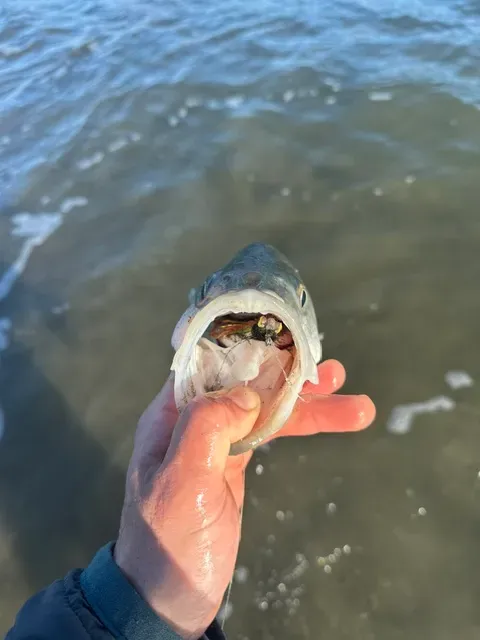
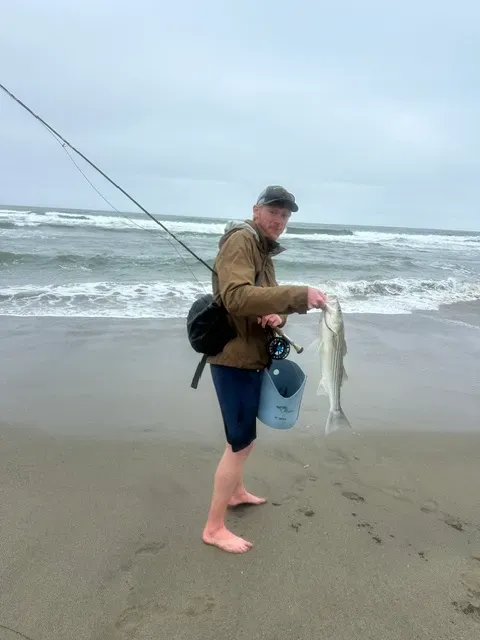
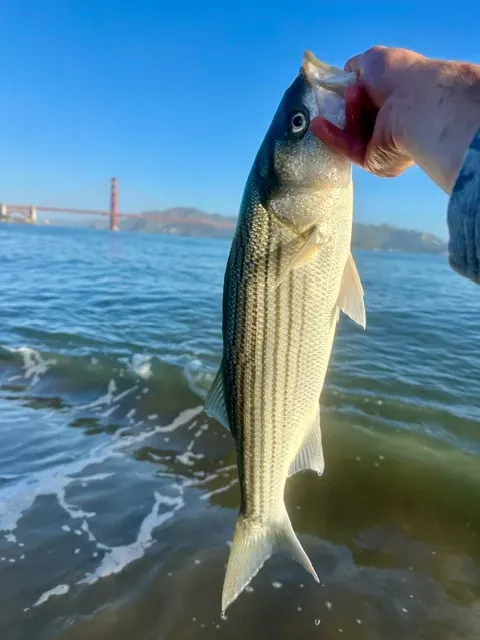
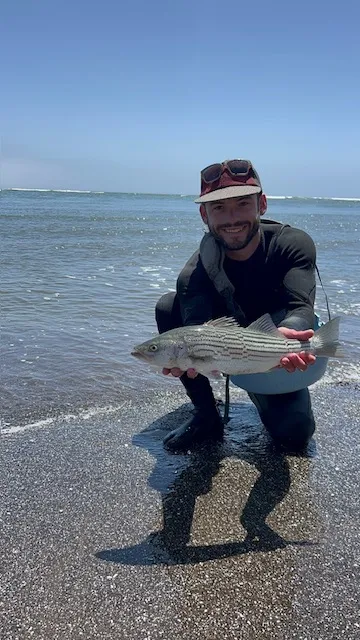
The ultimate prize for any angler standing on this stretch of sand is the striped bass. These powerful, silver-flanked predators with dark horizontal stripes migrate along the coast to ambush schools of anchovies, surf smelt, and large crustaceans. A strike from a striped bass is explosive, often followed by a blistering run against the undertow that will severely test your drag system.
While school-sized stripers provide excellent sport, the potential to land a legitimate trophy fish exceeding twenty pounds draws dedicated casters to the shoreline year after year. To learn more about the biology and seasonal habits of these magnificent predators, you can review our comprehensive El Cerrito Fishing Species guide.
California Halibut: The Flatfish Ambush
Another highly sought-after catch is the California halibut. These predatory flatfish are masters of camouflage, burying themselves in the soft sand along the edges of the deeper troughs and waiting to ambush unsuspecting baitfish.
Targeting halibut requires a patient, methodical approach. Your presentation must remain close to the bottom, whether you are bouncing a heavy jig or stripping a heavily weighted fly on a sinking line. When hooked, a halibut fights with a distinctive, heavy bulldogging motion, using its broad body against the current.
Leopard Sharks and Occasional Visitors
During the spring and summer months, the warming waters often bring other exciting species within casting range. Leopard sharks, which are beautiful, distinctly patterned bottom feeders, frequently patrol the sandy flats in search of crabs and small fish. They provide a thrilling, heavy-pulling battle. Occasionally, anglers might also encounter jacksmelt or various rays, ensuring that every cast holds the potential for a surprising catch.
When to Go: Seasonal and Daily Timing
In the marine environment, timing is everything. Fish behaviour is dictated by water temperatures, bait migrations, and the gravitational pull of the moon.
The Best Seasons for the Surf
While barred surfperch can be caught reliably in all twelve months, the peak season for larger predators is distinctly seasonal. From late spring through the autumn months, the ocean waters warm slightly, drawing massive schools of baitfish closer to the shoreline. This migration triggers the arrival of the striped bass and California halibut.
The autumn months, particularly September and October, are widely regarded as the absolute pinnacle for targeting trophy striped bass from the sand, as the fish feed heavily to build fat reserves. In contrast, the winter months, when the swell is often larger and the water cooler, offer some of the most consistent action for large, schooling barred surfperch.
The Critical Role of Tides
Understanding water movement is the single most important factor in coastal angling. Moving water stimulates the entire food chain. While anglers often study sf bay tides for fishing when targeting the inner harbours, these exact same principles apply to the outer ocean beaches.
The incoming tide—specifically the two to three hours leading up to high slack water—is generally the most productive window. As the tide rises, it floods the shallow troughs and sandbars, giving larger predators the necessary depth and security to hunt incredibly close to the beach.
Dawn and Dusk Windows
Lighting conditions heavily influence how close predators will venture toward the dry sand. Low-light periods provide fish with the camouflage they need to hunt aggressively in shallow water. Arriving at the beach before first light allows you to intercept predators feeding under the cover of darkness. Similarly, the late afternoon fading into dusk triggers aggressive feeding frenzies as baitfish become silhouetted against the declining light.
Essential Gear and Tactics for the Sand
The harsh, corrosive nature of the saltwater environment and the sheer power of the surf require specialised tackle that differs greatly from standard freshwater gear.
Tackle for the Pacific Swell
For conventional spin anglers, a long surf rod measuring between nine and twelve feet is standard. This length provides the leverage needed to cast heavy sinkers over the breaking waves and keeps your main line elevated above the churning white water. A reel spooled with twenty to thirty-pound braided line allows for maximum casting distance and provides the sensitivity to feel subtle bites.
For the dedicated fly angler, a fast-action nine-weight rod paired with a fully sealed saltwater reel is essential. You must utilise heavy, fast-sinking shooting heads to cut through the surface foam and deliver your fly directly into the deeper troughs. A stripping basket worn around the waist is also mandatory to keep your loose line from tangling in the swirling surf.
Baits and Lures That Work
When fishing with bait, matching the natural forage is key. Sand crabs are abundant on the beach and serve as the absolute best natural bait for surfperch and striped bass. You can easily collect them by digging in the wet sand as the waves recede.
For those using artificial presentations, heavy spoons, soft plastic swimbaits, and bucktail jigs are highly effective for stripers and halibut. Fly anglers typically rely on custom-tied Clouser Minnows and heavy baitfish patterns that mimic the profile of anchovies or surf smelt.
Navigating Legal Requirements and Conservation
Before you set foot on the beach with a rod in hand, every angler must ensure they are fully compliant with state wildlife statutes.
Securing Your Documentation
The state manages its coastal fisheries rigorously to protect the delicate marine ecosystem. Therefore, all individuals aged sixteen and older must possess a valid california fishing license before attempting to harvest fish from public waters. Because you will be angling in the ocean, it is imperative that your permit includes an Ocean Enhancement Validation.
State wildlife officers actively patrol the beaches, and failing to hold the correct documentation can result in severe fines. You can easily purchase your credentials online through the state's digital portal prior to your trip. For a comprehensive breakdown of the fees, rules, and digital purchasing instructions, we strongly recommend reviewing our detailed guide on How to Get a California Fishing License.
Elevating Your Experience with Expert Guidance
Decoding the shifting sand structures, timing the complex tidal movements, and mastering the casting mechanics required for the heavy surf can present a steep learning curve for unguided anglers. Attempting to master this environment alone often leads to frustrating days untangling lines in the wash.
This is why partnering with an expert team is the ultimate investment for your angling journey. If you are exploring the various fishing trips san francisco ca has to offer, Strip Set Fly Fishing Adventures provides a uniquely educational, land-based experience. Led by passionate professionals, our service is built entirely around shoreline angling. We supply all the premium gear, teach you exactly how to read the coastal troughs, and provide patient, hands-on instruction to ensure you leave the sand with practical, lifelong skills. To discover more about our mission and our specialised approach to the surf, please visit the Strip Set Fly Fishing Adventures home page.
Conclusion
Embarking on the challenge of fishing at Ocean Beach San Francisco is one of the most thrilling and visually stunning outdoor adventures available in Northern California. From the heart-stopping surge of a striped bass striking in the shallow wash to the immense satisfaction of reading the water perfectly, every moment on the sand connects you deeply with the raw power of the Pacific. By understanding coastal structure, aligning your sessions with the optimal tides, securing your state documentation, and learning alongside passionate local professionals, you set the strongest possible foundation for an extraordinary angling achievement. The tide is turning, the baitfish are moving into the troughs, and the pristine surf is waiting. Review our real-time calendar and Book Now to secure your private, expertly guided coastal adventure today.
Frequently Asked Questions (FAQs)
1. Is the outer beach safe for beginner anglers?
While the outer beach offers fantastic angling, the surf and undertow can be incredibly powerful. Beginners must exercise extreme caution, avoid wading deeply into the water, and never turn their backs on the ocean. Booking a guided shore session is the safest way to learn the mechanics of the surf while under professional supervision.
2. What is the most effective natural bait for surfperch?
Sand crabs are undeniably the most effective and natural bait for barred surfperch. They are abundant on the beach and can be easily collected by hand or with a small wire net as the waves recede down the slope of the sand.
3. Do I need a special endorsement on my permit to fish the ocean?
Yes. In addition to your standard state sport fishing permit, any angler aged sixteen or older fishing in ocean waters, bays, or coastal estuaries must purchase and carry an Ocean Enhancement Validation.
4. What equipment do I need to fly fish the heavy surf?
Surf fly fishing requires robust tackle, including a fast-action 8-weight or 9-weight rod, a fully sealed disc-drag reel, fast-sinking shooting heads, and a wearable stripping basket to manage your loose line and keep it out of the crashing waves.
5. What is the best time of day to target striped bass from the sand?
The low-light periods of dawn and dusk are generally the most productive windows. During these times, striped bass feel secure enough to push incredibly close to the shoreline to ambush baitfish, making them accessible to both conventional casters and fly anglers.