/filters:format(jpeg,png)/fit-in/300x300/guide_websites/182861/images/1787627663117stripsetflyfishing.jpg)
/filters:format(jpeg,png)/fit-in/237x80/guide_websites/182861/images/1787627663117stripsetflyfishing.jpg)
Fly Casting Lessons in San Francisco: What Beginners Should Expect
%2Ffit-in%2F1000x1000%2Ffilters%3Aformat(webp)%2Fguide_websites%2F182861%2Fimages%2F1787624498324one-on-one-fly-casting-instruction-bay-area3.jpg&w=1920&q=75)
Published: September 15, 2026
When most people picture fly angling, their minds immediately wander to tranquil alpine streams, meandering rivers, and delicate dry flies landing softly on crystal-clear freshwater pools. However, Northern California offers a dramatically different and incredibly exciting arena for the sport. The sprawling, fog-swept beaches and the dynamic tidal zones of the Pacific coast provide an unparalleled environment for saltwater angling. Casting into the churning white water of the ocean requires a distinct set of skills, but the reward of connecting with a powerful marine predator right from the sand is simply unmatched.
For complete beginners, the prospect of tackling the coastal surf with a fly rod can initially feel intimidating. The ocean is vast, the breezes are consistent, and the gear differs significantly from standard freshwater tackle. This is precisely why enrolling in professional fly casting lessons San Francisco offers is the smartest decision a novice can make. A structured, educational approach removes the frustration of trial and error, allowing you to build foundational mechanics safely and effectively.
If you are eager to learn the art of the cast but unsure of where to begin, this comprehensive guide will walk you through everything you need to know. We will explore why the beach is the ultimate classroom, what specific techniques you will learn during your session, the specialised gear required for the salt, and the essential legalities you must prepare for before stepping onto the sand.
Why the Beach is the Perfect Classroom for Beginners
Learning a new athletic skill requires focus, stability, and a supportive environment. While boat-based charters are popular for offshore fishing, the shoreline provides a uniquely ideal setting for introductory fly casting instruction San Francisco style.
The Stability and Safety of Land-Based Learning
One of the greatest challenges for any novice is trying to learn complex body mechanics while balancing on a rocking boat deck. Boat charters often involve tight spaces, engine fumes, and the looming threat of seasickness, all of which distract from the learning process. By contrast, wading into the gentle wash of the beach provides a completely stable, grounded foundation.
Standing firmly on the sand allows you to focus entirely on your casting stroke, your timing, and your line management without worrying about losing your footing. You have an expansive, open area behind you to practice your backcast safely, and you can easily step out of the water at any time to receive hands-on feedback from your instructor. This stress-free environment accelerates the learning curve, ensuring you build confidence rapidly.
Direct Connection with the Coastal Ecosystem
Fishing from the shore also forces you to become an active observer of the marine environment. During your introductory session, you will not just learn how to cast; you will learn how to read the water. The beach is a dynamic, living ecosystem shaped by wind, waves, and underwater topography.
You will learn to identify crucial structures like coastal troughs (the deeper channels running parallel to the beach) and rip currents, which act as natural funnels for baitfish. Understanding these features transforms a vast, seemingly featureless ocean into a series of readable, targeted zones, giving you the knowledge to fish independently in the future.
What to Expect from Your Coaching Session
A high-quality educational outing is structured to break down complex movements into easily digestible steps. Your guide will work with you at your own pace, ensuring you understand the "why" behind every technique.
Mastering the Basics: The Overhead Cast and Line Management
Your lesson will typically begin on the dry sand, focusing on the fundamental overhead cast. Because saltwater angling requires heavy, sinking lines and large, wind-resistant flies, establishing a tight, aerodynamic casting loop is absolutely critical. Your instructor will demonstrate how to smoothly accelerate the rod, emphasising a crisp stop on both the backcast and the forward cast to transfer energy efficiently into the line.
Once you transition into the water, the focus shifts to line management. The crashing waves and strong undertow of the surf will actively pull at your loose fly line. Learning how to retrieve your line rhythmically while maintaining constant tension is vital for detecting subtle strikes from fish feeding in the foam.
Conquering the Wind: The Double Haul Technique
As you grow more comfortable with the basic overhead cast, your instructor will introduce the double haul. This advanced technique involves pulling sharply on the fly line with your non-casting hand during both the backward and forward strokes. The double haul dramatically increases line speed and bends the rod deeper, allowing you to shoot the line effortlessly through stiff coastal breezes.
While mastering the double haul can be a stumbling block for self-taught anglers, having a professional guide physically demonstrate the timing makes the process infinitely easier. It is a critical skill for any saltwater environment, and learning it correctly from day one will save you years of frustration.
Decoding the Ocean: Understanding sf bay tides for fishing
Casting is only half the battle; knowing when and where to cast is equally important. In the marine environment, fish behaviour is heavily dictated by the gravitational pull of the moon. During your session, your guide will explain how to interpret sf bay tides for fishing.
You will learn why the incoming tide is generally the most productive window, as rising water floods the shallow sandbars and allows larger predators to push incredibly close to the beach. Understanding how tidal movement influences baitfish migrations will give you a profound appreciation for the rhythmic nature of the Pacific coast.
The Specialised Gear Provided During Your Lesson
The corrosive nature of saltwater and the physical demands of the surf require tackle that is vastly different from a standard trout setup. When you book a reputable lesson, all of this premium gear is supplied for you.
Rods, Reels, and Sinking Lines
Your guide will equip you with a fast-action 8-weight or 9-weight fly rod. These robust rods possess the necessary backbone to combat ocean breezes and subdue powerful marine fish. The rod will be paired with a fully sealed, saltwater-safe disc-drag reel, which is essential to prevent fine sand and salt from destroying the internal drag mechanisms.
Furthermore, surf angling relies heavily on sinking shooting heads. An intermediate or fast-sinking line is crucial for cutting through the turbulent surface chop and delivering your fly swiftly into the deeper troughs where predators actively hunt.
The Essential Stripping Basket
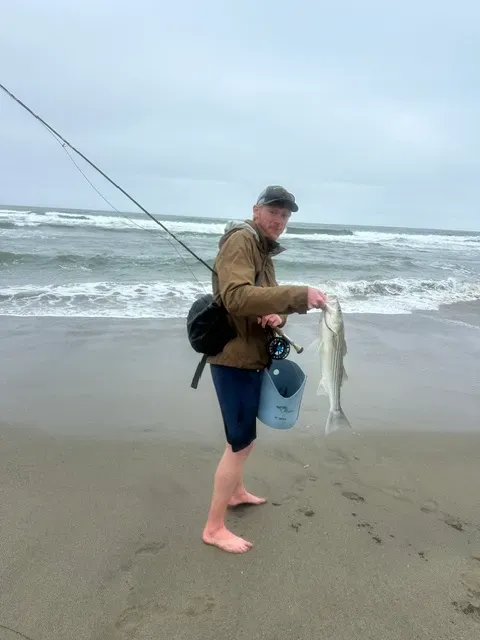
Perhaps the most uniquely vital tool for shoreline fly angling is the stripping basket. Worn securely around the waist, this rigid tray catches your retrieved line, keeping it elevated above the swirling water and sand. Without a stripping basket, the strong coastal undertow would drag your loose line away, causing disastrous tangles around your legs and completely ruining your ability to cast. Using one feels awkward for the first five minutes, but it quickly becomes an indispensable extension of your body.
Custom Flies Matched to the Local Forage
You will not be casting generic store-bought patterns. Professional guides provide proprietary, custom hand-tied flies designed specifically to mimic the local coastal forage. These patterns often include heavy dumbbell eyes to sink quickly, alongside vibrant materials like chartreuse bucktail or realistic sand crab imitations, ensuring your presentation matches exactly what the local predators are hunting.
Preparing for Your First Lesson: What You Need to Bring
While your guide supplies the technical fishing tackle, you are responsible for bringing a few personal items and ensuring your legal documentation is perfectly in order.
Securing Your california fishing license
The state of California rigorously manages its coastal fisheries to protect the delicate marine ecosystem. Therefore, all anglers aged sixteen and older must possess a valid california fishing license before attempting to cast a line into public waters.
Because your lesson will take place in the ocean surf or tidal bays, it is absolutely imperative that your permit includes an Ocean Enhancement Validation. State wildlife officers actively patrol the beaches, and failing to hold the correct documentation can result in severe fines. Fortunately, the purchasing process is incredibly modern and straightforward. You can easily buy your credentials online through the state's digital portal prior to your trip. For a comprehensive breakdown of the fees, validity periods, and digital purchasing instructions, we strongly recommend reviewing our detailed guide on How to Get a California Fishing License.
Apparel and Comfort Essentials
The weather along the Northern California coastline is famously erratic. A session that begins enveloped in a dense, chilly morning fog can quickly transition into a blazing, sun-drenched afternoon. Layering is the ultimate key to staying comfortable. Start with a moisture-wicking base layer, add a warm fleece mid-layer, and top it off with a lightweight, wind-resistant outer shell to shield you from the salty sea breeze.
Additionally, a high-quality pair of polarised sunglasses is absolutely mandatory. Polarised lenses with amber or copper tints cut through the harsh surface glare of the ocean, allowing you to read the underwater structure and spot cruising fish. Just as importantly, they provide crucial physical protection for your eyes from stray hooks in windy conditions. Do not forget to pack non-spray sunscreen, a wide-brimmed hat, and plenty of drinking water to keep your energy high.
Target Species for Novice Coastal Anglers
The shallow coastal troughs and tidal flats of the Bay Area support a remarkably diverse array of sportfish, providing exciting and accessible targets for anglers who are just learning the ropes.
The Dependable Barred Surfperch
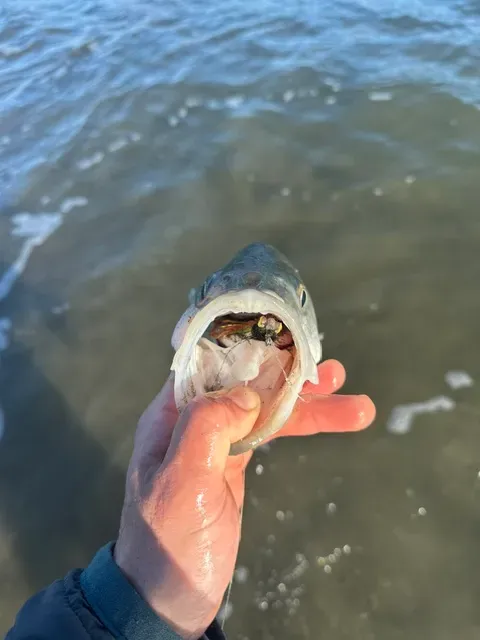
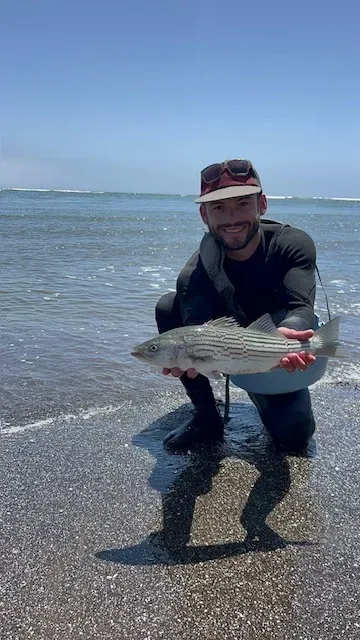
For those taking fly fishing lessons San Francisco style, the barred surfperch is an absolute gift. These resilient, silver-bodied fish with distinct bronze vertical bars cruise the white-water breakers year-round, feeding heavily on sand crabs and marine worms. They are incredibly cooperative biters and fight with a surprising tenacity for their size. Targeting surfperch provides constant, reliable action that builds beginner confidence and helps novices refine their bite detection in the turbulent surf.
Chasing Striped Bass and California Halibut
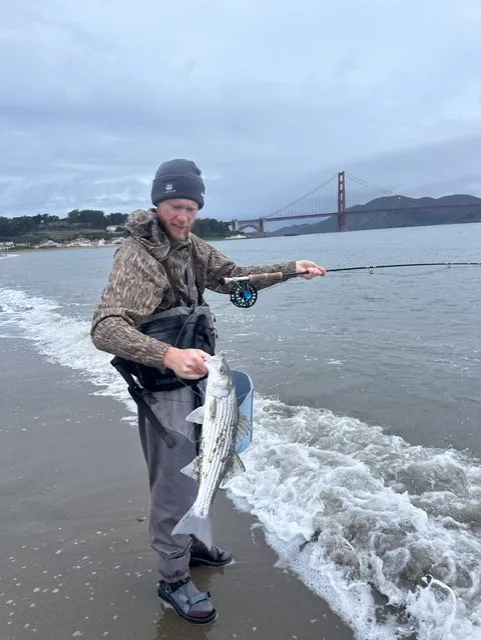
Once you have gained confidence with your casting stroke and line management, the ultimate prize is the striped bass. These powerful, migratory predators push into the surf zone during the summer and autumn months to ambush baitfish. A strike from a striped bass is explosive, instantly testing both your gear and your nerve.
Additionally, the sandy coastal bottoms host the California halibut, a master of camouflage that requires a patient, bottom-bouncing presentation. Landing one of these prized flatfish on a fly rod is a true triumph for any angler. To gain a deeper understanding of the biology, seasonal habits, and specific tactics required to target these remarkable fish, review our comprehensive El Cerrito Fishing Species guide.
Elevating Your Experience with Strip Set Fly Fishing Adventures
While the prospect of teaching yourself to cast in the surf is an admirable goal, the ocean is a complex and occasionally unforgiving environment. Investing in professional, hands-on guidance is the absolute most effective way to guarantee your safety, dramatically accelerate your learning curve, and ensure you actually connect with fish.
When you are ready to embark on your angling journey, partnering with the dedicated team at Strip Set Fly Fishing Adventures ensures a world-class, education-first experience. Led by equal co-owners Spencer Johnson and Mike Lawson, our operation is built entirely around 100% land-based shore angling. By focusing exclusively on the beaches and tidal zones, we provide a welcoming, stable environment that is perfectly suited for beginners. There are numerous fishing trips san francisco ca has to offer, but few provide the level of personalised instruction found on the beach.
We supply all the premium, beach-specific equipment you need for your session. This includes fast-action rods, sealed drag reels, breathable waders, wading boots, stripping baskets, and custom flies meticulously hand-tied by our team to match the exact seasonal forage of the bay. Combining years of professional river guiding and high-end culinary hospitality with profound local coastal knowledge, our primary mission is to provide an inclusive, highly supportive atmosphere. We do not just put a rod in your hand; we outfit you with the deep knowledge, the mechanical foundation, and the environmental awareness to become a completely self-sufficient surf angler for the rest of your life.
Conclusion
Embarking on the journey of learning to cast a fly into the majestic Pacific surf is an incredibly rewarding endeavour. The dramatic coastline of Northern California offers an unparalleled classroom for those willing to embrace the elements and learn a new athletic skill. From the initial thrill of executing your very first double haul to the immense satisfaction of landing a beautifully patterned surfperch directly from the sand, every single moment spent on the beach deepens your connection to the natural world.
By familiarising yourself with the essential gear, understanding the vital legal licensing requirements, and investing in dedicated, professional instruction, you set the strongest possible foundation for a lifetime of angling success. The tides are shifting, the morning fog is lifting, and the pristine beaches are waiting for your first cast. Review our real-time availability and Book Now to secure your personalised, expert-led coastal adventure today.
Frequently Asked Questions (FAQs)
1. Do I need any previous casting experience to book a beginner session on the beach?
Not at all. Our land-based clinics are specifically designed for complete novices. Standing firmly on the sand provides a stable, secure environment where our expert guides can offer patient, step-by-step instruction on fundamental mechanics, ensuring you learn at a comfortable and highly productive pace.
2. What equipment is provided during a guided shore lesson?
We supply absolutely everything you need for a successful session. This includes premium 8-weight and 9-weight fly rods, fully sealed saltwater reels, sinking lines, stripping baskets, high-quality breathable waders, wading boots, and custom hand-tied flies designed specifically for the local coastal waters.
3. Can children participate in these shoreline fly casting clinics?
Yes, shore-based angling is a highly engaging and safe activity for younger participants. Without the unpredictability of a rocking boat or the risk of seasickness, children can comfortably focus on learning the mechanics of the cast and enjoying the coastal environment under close, professional supervision.
4. How do I manage my line in the crashing surf?
Managing loose line in the surf is impossible without the proper tool, which is why we equip every guest with a wearable stripping basket. This rigid tray sits at your waist and catches your retrieved line, keeping it completely clear of the swirling water and sand so you can cast freely and without frustration.
5. What personal items should I bring to my first lesson?
You must bring a valid state sport fishing permit equipped with an Ocean Enhancement validation for anyone aged sixteen or older. Additionally, we strongly recommend packing polarised sunglasses for essential eye protection and glare reduction, non-spray sunscreen, a brimmed hat, and comfortable layered clothing to adapt to the shifting coastal weather.