/filters:format(jpeg,png)/fit-in/300x300/guide_websites/182861/images/1787627663117stripsetflyfishing.jpg)
/filters:format(jpeg,png)/fit-in/237x80/guide_websites/182861/images/1787627663117stripsetflyfishing.jpg)
How to Read the San Francisco Shoreline Before You Cast
%2Ffit-in%2F1000x1000%2Ffilters%3Aformat(webp)%2Fguide_websites%2F182861%2Fimages%2F1787624498324one-on-one-fly-casting-instruction-bay-area3.jpg&w=1920&q=75)
Published: September 15, 2026
Standing on the edge of the Pacific Ocean with a fly rod in hand is a profoundly humbling and exhilarating experience. The vast expanse of crashing surf, shifting sand, and swirling currents can easily overwhelm a newcomer. To the untrained eye, the coastal waters of Northern California might appear as a chaotic, uniform wall of white water and rolling swells. However, beneath the surface lies a highly structured and dynamic environment. The difference between spending a day blindly casting into empty water and successfully connecting with a powerful marine predator comes down to one critical skill: reading the water.
Every wave, colour change, and foam line tells a story about the topography of the seabed and the movement of marine life. Predatory gamefish do not wander the ocean aimlessly. They are highly calculated hunters that use the natural structures of the beach to conserve energy and ambush their prey. By learning to decode the visual clues presented by the shoreline, you can accurately predict where these predators are holding before you even strip your first length of line from the reel.
This comprehensive guide is designed to transform the way you look at the beach. We will break down the fundamental anatomy of the coastal environment, exploring how sandbars, troughs, and rip currents dictate fish behaviour. We will discuss the vital importance of water movement, how to interpret the actions of local marine birds, and the necessary legal preparations you must complete before stepping onto the sand.
The Anatomy of the Coastal Environment
To find gamefish along the beach, you must first understand the physical layout of the sandy seabed. The surf zone is in a constant state of construction and demolition, heavily influenced by the relentless pounding of ocean swells.
Identifying Sandbars and Troughs
The most fundamental structures on any sandy beach are the sandbars and the troughs. Sandbars are elevated mounds of sand that run parallel to the shoreline, built up by the energy of breaking waves. When ocean swells approach the beach and encounter the shallow incline of a sandbar, the wave stands up and breaks, creating a visible line of white water.
Immediately in front of or behind these sandbars are the troughs. A trough is a deeper channel or ditch carved out by the parallel movement of water along the beach. Because the water is deeper here, it appears darker—often taking on a deep green or blue hue compared to the churned-up sandy colour of the shallower bars. Troughs are the primary highways and holding zones for coastal gamefish. Fish will sit in the deeper, darker water of a trough, enjoying the protection it offers, whilst waiting to ambush disoriented baitfish that are washed off the adjacent sandbars by the crashing waves.
Spotting Rip Currents and Seams
While troughs run parallel to the shore, rip currents move perpendicular to it. A rip current is formed when the immense volume of water pushed onto the beach by breaking waves finds a narrow channel to rush back out to the open ocean. These currents are essentially underwater rivers flowing away from the sand.
You can identify a rip current by looking for a break in the incoming wave pattern. The water in a rip often looks choppy, turbulent, and muddy, carrying foam and sediment out beyond the breakers. While rip currents can be dangerous for swimmers, they are absolute magnets for predatory fish. Gamefish will sit just on the outer edges, or "seams," of a rip current. They conserve their energy in the slower-moving water while waiting for the fast-flowing rip to deliver a helpless stream of crabs, sand eels, and small baitfish directly to them.
The Influence of Water Movement and Conditions
The physical structure of the beach provides the habitat, but it is the movement of the water that triggers feeding activity. Understanding how external forces manipulate the ocean is crucial for timing your casting sessions.
Mastering the Tidal Fluctuations
The single most important factor governing marine behaviour is the gravitational pull of the moon. Water movement creates life in the ocean, and mastering the sf bay tides for fishing will drastically improve your success rate. Moving water stirs up the seabed, dislodges crustaceans, and forces small baitfish to fight the current, making them easy targets for larger predators.
Generally, the incoming, or flood, tide is considered the most productive window for shoreline anglers. As the water level rises, it floods the shallow troughs and pushes over the outer sandbars, giving larger predators the depth they require to move close to the shore and hunt aggressively. The two to three hours leading up to a high tide often see the most intense feeding frenzies right at the water's edge. Conversely, during a falling tide, you should focus your efforts on the mouths of rip currents, where receding water funnels baitfish away from the shallows.
Wind, Swell, and Water Clarity
In addition to the tides, atmospheric weather plays a massive role in surf conditions. Fish rely heavily on visual cues to hunt in the shallows. If a massive storm churns up the ocean and fills the water column with suspended sand and thick kelp, gamefish will often retreat to deeper, clearer water.
Before planning an outing, reviewing a local san francisco bay fish report can provide invaluable insights into recent swell heights and water clarity. A moderate swell of two to three feet is often ideal, as it creates enough water movement to stir up food without making the water completely murky. Furthermore, paying attention to the wind direction is critical for fly casting. An onshore wind blowing directly into your face makes casting extremely difficult, whereas a gentle offshore breeze will help carry your fly line out over the surf.
Recognising Marine Life and Forage
Reading the water is not solely about looking at waves and currents; it is also about observing the biological activity happening around you. Nature provides its own indicators if you know what to look for.
Bird Activity as a Primary Indicator
Seabirds are the greatest allies a shoreline angler possesses. Birds have an incredible vantage point from the sky and are exceptionally skilled at locating large schools of baitfish. When you arrive at the beach, take a moment to scan the horizon. If you see a flock of pelicans or terns diving aggressively into the water, it is a guaranteed sign that baitfish are present.
Even subtle bird behaviour can be revealing. Seagulls hovering closely over the wash or picking at the sand often indicate that predators are pushing bait up into the extreme shallows. Following the birds is one of the most reliable strategies for locating active, feeding gamefish along a vast stretch of coastline.
Locating Coastal Gamefish
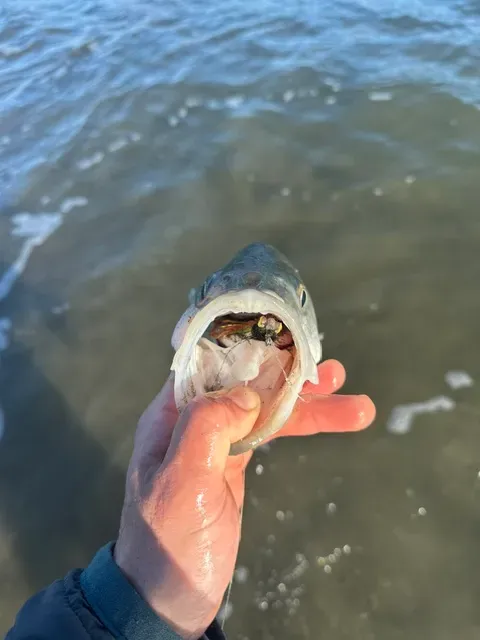
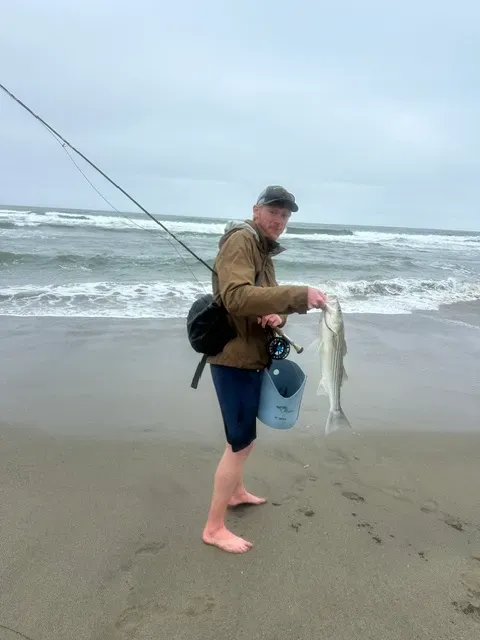
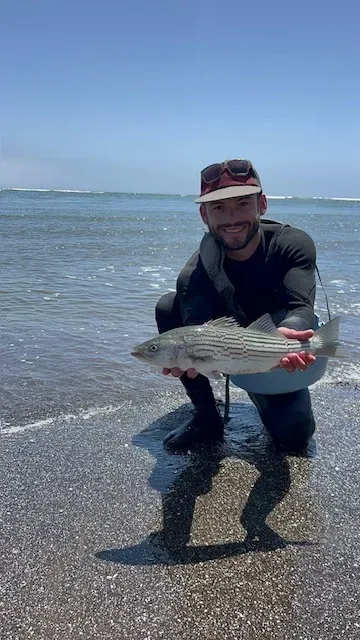
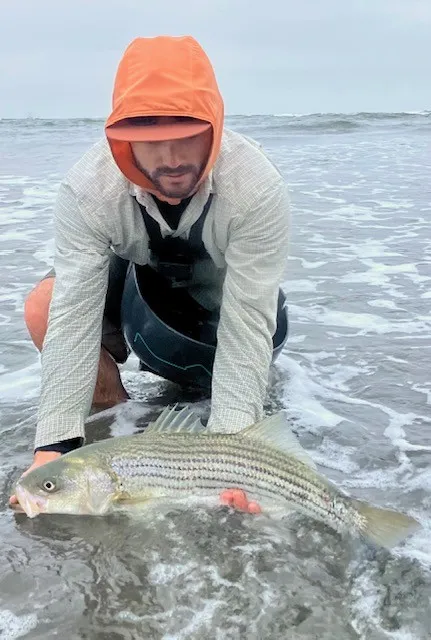
Once you have identified the troughs, rips, and bird activity, you can begin to target the specific species that inhabit these zones. Different gamefish prefer different types of coastal structures. Striped bass, for example, are highly aggressive and will often cruise the very edges of the white water, actively hunting in the turbulence.
Conversely, for those focusing on halibut fishing bay area sandy drop-offs provide the perfect ambush terrain. These flatfish prefer to bury themselves in the softer sediment on the edges of deep troughs, relying on their camouflage to strike upwards at passing bait. Understanding the distinct hunting methods of these predators dictates how deep you should let your fly sink and how fast you should retrieve it. To gain a deeper understanding of the specific fish patrolling these waters, you can review our comprehensive guide on local coastal species.
Essential Legal Preparations
Before you begin executing perfect casts into the coastal troughs, you must ensure that you are legally permitted to harvest or target fish in the region. The state maintains strict regulations to protect its delicate marine ecosystems.
Securing Your Permits
Operating within the bounds of state law is a fundamental responsibility for every angler. In Northern California, anyone aged sixteen or older must hold the correct documentation to fish in public waters. Securing a california fishing license is a mandatory requirement before you even think about rigging your fly rod on the beach.
Because you will be targeting fish in the ocean surf or estuarine bays, your documentation must also include a specific Ocean Enhancement validation. This validation is vital, as the funds directly support marine research, habitat restoration, and the preservation of the coastal fisheries you are enjoying. Wildlife officers frequently patrol the popular beaches, and failing to present valid documentation will result in severe penalties and the immediate end of your fishing day. If you need assistance navigating the permit system, we have compiled a step-by-step walkthrough on acquiring your state fishing credentials.
Elevating Your Skills with Professional Instruction
Learning to read the shoreline is a skill that takes years to master. The ocean is incredibly complex, and trying to decipher the shifting sands and currents on your own can lead to frustrating days on the water.
The Advantage of Guided Exploration
This is precisely why engaging with a professional instructor can dramatically accelerate your learning curve. When searching through the various fishing trips san francisco ca has available, choosing a dedicated land-based guide service ensures you receive the focused, educational experience you need. A professional will stand beside you on the sand, physically pointing out the subtle colour changes of a trough and demonstrating how to cast a sinking fly into the seam of a rip current.
At our dedicated coastal operation, we prioritise education above all else. We do not just hand you a rod; we teach you the underlying mechanics of the environment so that you can return to the beach with confidence. If you are ready to stop guessing and start truly understanding the marine ecosystem, we invite you to explore our approach on our Strip Set Fly Fishing Adventures and see how we can transform your perspective on the coast.
Conclusion
Reading the shoreline is an art form that blends physical observation with a deep appreciation for marine biology. By understanding the anatomical structures of the beach, respecting the power of tidal movements, and observing the natural indicators provided by seabirds, you can unlock the hidden potential of the coastal surf. Every trip to the beach becomes an exercise in environmental problem-solving, making every successful catch infinitely more rewarding. The sandbars have formed, the tide is beginning to push clean water into the troughs, and the predators are moving in to feed. Secure your date with our local experts and Book Now to master the art of the coastal cast today.
Frequently Asked Questions (FAQs)
1. What is the most important visual clue when reading a sandy beach?
The most important visual clue is the colour of the water. Breaking white waves indicate shallow sandbars, while darker green or blue water indicates a deeper trough. Gamefish typically use the deeper, darker troughs to travel and ambush prey, making these areas your primary casting targets.
2. Is it safe to wade near rip currents?
Rip currents are powerful outward flows of water that can be dangerous. As an angler, you should never wade deeply into a strong rip current. Instead, you should stand safely on the shallower adjacent sandbar and cast your fly into the slower-moving water along the edges, or seams, of the rip where fish wait to feed.
3. Do I need a special rod to cast in the ocean surf?
Yes, fishing in the coastal surf requires robust tackle. A fast-action 8-weight or 9-weight fly rod is generally recommended. These heavier rods provide the backbone necessary to cast heavy sinking lines and weighted flies directly into stiff coastal breezes, whilst also giving you the leverage to fight large, powerful gamefish.
4. How long before high tide should I start fishing?
The incoming tide is generally the most productive time on the beach. Arriving approximately two to three hours before the peak of high tide allows you to fish the strongest push of moving water. This is when the troughs fill up, and predators confidently move into the extreme shallows to hunt for dislodged bait.
5. Are coastal fishing permits required for catch-and-release fishing?
Absolutely. In California, you must hold a valid state sport fishing licence with the appropriate ocean validations regardless of whether you intend to keep your catch or release it. The permit is required to legally engage in the act of fishing on public waterways.