/filters:format(jpeg,png)/fit-in/300x300/guide_websites/182861/images/1787627663117stripsetflyfishing.jpg)
/filters:format(jpeg,png)/fit-in/237x80/guide_websites/182861/images/1787627663117stripsetflyfishing.jpg)
What Fish Can You Catch While Fly Fishing in San Francisco?
%2Ffit-in%2F1000x1000%2Ffilters%3Aformat(webp)%2Fguide_websites%2F182861%2Fimages%2F1787624498324one-on-one-fly-casting-instruction-bay-area3.jpg&w=1920&q=75)
Published: September 15, 2026
The coastal waters surrounding Northern California represent one of the most dynamic marine environments in North America. Where the vast expanse of the Pacific Ocean merges with rich estuarine bays, a thriving ecosystem supports a rich variety of predatory gamefish. For fly anglers, this dramatic intersection of land and sea offers exceptional opportunities to target powerful species right from the shoreline. While many people associate coastal angling with offshore boat charters, stepping onto the sand with a fly rod provides an intimate, athletic, and deeply rewarding connection to the marine environment.
Understanding which species inhabit these waters, when they arrive, and how they behave is the foundation of successful coastal fly angling. Whether working the turbulent surf of outer ocean beaches or casting into quiet bay flats, knowing what lies beneath the surface allows you to choose the right tackle, flies, and tactical approach. This comprehensive guide outlines the primary fish species you can catch while fly fishing around the peninsula, detailing their habits, seasonal availability, and the unique challenges they present to shore-based casters.
The Unique Marine Ecosystem of the San Francisco Coastline
The marine waters around the region are shaped by complex oceanographic forces. Cold, nutrient-rich currents moving southward along the coast fuel a marine food web that supports everything from microscopic plankton to massive migratory gamefish.
Meeting of Estuary and Ocean Currents
The massive bay functions as a nursery and feeding ground for countless marine organisms. Millions of gallons of water flow through the narrow Golden Gate channel during every tidal cycle. This constant movement mixes warm estuarine runoff with cold ocean water, creating a fertile feeding zone along sandy beaches, rocky points, and mudflats.
Because food is abundant, predatory fish venture into shallow water to feed on anchovies, herring, sand crabs, and market squid. Shoreline fly casters can intercept these predators directly from the beach, taking advantage of shallow troughs where baitfish become trapped by ocean currents.
Seasonality and Water Dynamics
Water movement and temperature govern fish behaviour throughout the year. Coastal conditions shift between seasons, driving distinct migration patterns. Understanding how sf bay tides for fishing influence water clarity, salinity, and temperature is key to locating active fish.
During strong spring floods, warm water drains from inland rivers, drawing bait into shallow bays. Conversely, summer upwelling brings nutrient-rich cold water to outer beaches, attracting heavy schools of ocean predators. Recognising these shifts allows anglers to tailor their outings to match seasonal peaks.
Premier Species Targeted by Shoreline Fly Anglers
While several species occasionally take a fly, three primary gamefish dominate the shoreline fly-fishing scene. Each offers distinct fighting characteristics and requires specialised tactical adjustments.
Striped Bass: The Crown Jewel of the Surf
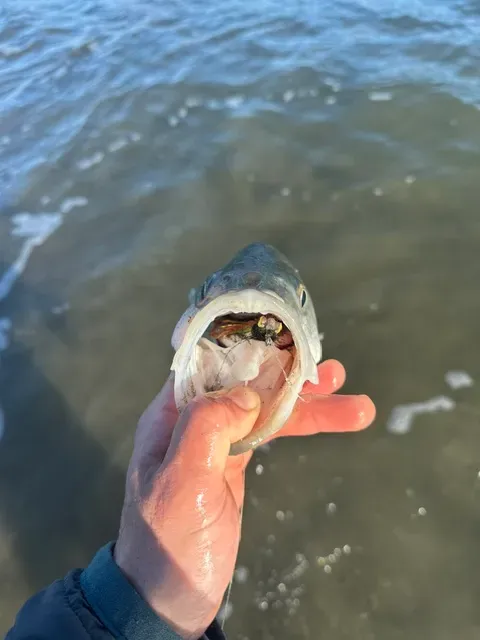
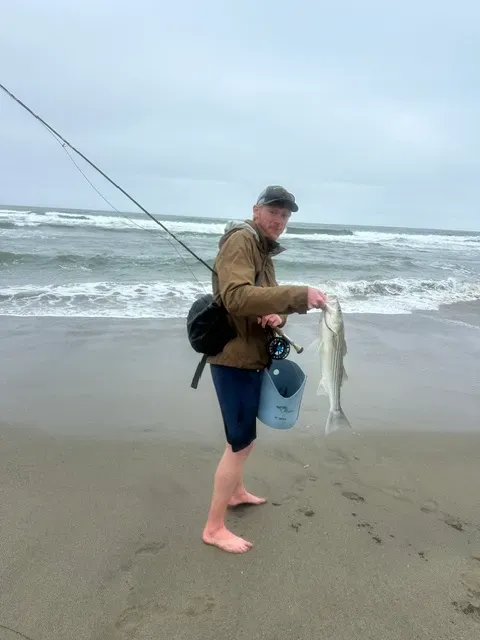
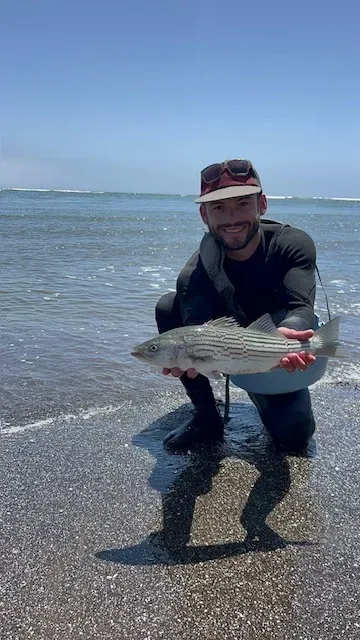
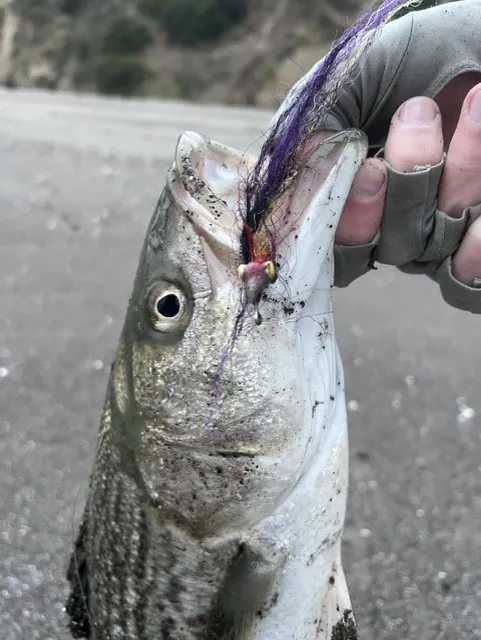
Without question, San Francisco Striped Bass fishing represents the ultimate challenge for regional saltwater fly casters. Striped bass are powerful, migratory predators that push into shallow ocean surf and bay shallows to hunt baitfish. Known for their silver flanks, distinct lateral lines, and aggressive feeding habits, these fish range in size from school-sized juveniles to specimens exceeding twenty pounds.
Hunting striped bass on foot requires patience, accurate casting, and rapid retrieval techniques. These predators often feed in white water where waves crash across sandbars, relying on turbulent surf to disorient baitfish like northern anchovies. When a striper hits a streamer fly in shallow water, the strike is hard and immediate, followed by powerful runs toward deep water. Anglers looking to target these hard-hitting fish during prime morning light often opt for a specialized morning tide striped bass and halibut pursuit session to maximize their time on the water.
California Halibut: Ambush Predators of the Sandy Flats
Another highly prized target for shore casters is the California halibut. Unlike their massive Pacific cousins found in deep northern waters, California halibut frequent shallow coastal bays, estuaries, and sandy ocean beaches. These flatfish are master camouflagers, burying themselves in sand to ambush passing prey.
Halibut fishing San Francisco Bay style is a tactical pursuit that rewards patience and precise line management. Halibut possess sharp teeth, large eyes positioned on top of their heads, and explosive short-burst speed. When targeting halibut with a fly rod, heavy sinking lines are essential to keep the fly bouncing along the ocean floor. A slow, twitching strip pattern mimics an injured baitfish or bottom-dwelling sculpin, enticing a halibut to rise from its sandy bed and strike.
Surfperch: Consistent Action Along the Waves
For continuous action and refined casting practice, San Francisco Surfperch fishing is unmatched. Multiple species of surfperch inhabit the Pacific shoreline, with barred surfperch being the most common target for fly anglers. These disc-shaped, golden-bronze fish patrol inner breakers and shallow troughs, feeding heavily on sand crabs, marine worms, and small crustaceans.
Barred surfperch frequently reach weights of one to two pounds, offering a spirited fight on light fly tackle. Because they gather in dense schools along sandy beaches, surfperch provide fantastic sport throughout the year, especially during winter months when other species move offshore. Using smaller weighted patterns such as crazy charlies or sand crab imitations fished near the bottom yields consistent catches.
Secondary Species and Incidental Catches
While striped bass, halibut, and surfperch are the primary targets, the diversity of the coastal environment means fly anglers occasionally encounter other interesting marine species.
Leopard Sharks and Bat Rays
The shallow mudflats and warm bay beaches support healthy populations of leopard sharks and bat rays. While rarely targeted specifically with traditional fly patterns, leopard sharks will occasionally pounce on large, heavy baitfish flies stripped slowly along deep channel edges. Their distinct spotted patterns and smooth swimming style make any unexpected hookup an unforgettable encounter.
Rockfish and Lingcod Around Structure
In areas where rocky headlands, jetties, and tidal reefs replace sandy beaches, fly casters may encounter various species of Pacific rockfish and juvenile lingcod. Fished with fast-sinking lines and durable streamer patterns close to submerged boulders, black rockfish, copper rockfish, and cabezon offer aggressive takes and vibrant photo opportunities.
To review a comprehensive breakdown of the seasonal availability and habits of these coastal gamefish, consult our detailed el cerrito fishing species guide before planning your next outing.
Seasonal Opportunities and Species Migration Patterns
Understanding the calendar year is essential for targeting specific fish along the Northern California coast, as water temperatures and forage movements dictate where predators concentrate.
Spring and Summer: The Arrival of Predators
As temperatures rise in late spring, massive schools of anchovies move into coastal bays and shallow ocean surf. Following closely behind are migratory striped bass and California halibut. Late spring through early autumn represents the prime window for targeting large predators in shallow water.
During mid-summer, warm afternoon winds can create rough surface conditions, making early morning or late evening sessions the most productive times to cast. The long daylight hours and abundant bait make summer an ideal season for anglers seeking aggressive takes and heavy visual strikes.
Autumn and Winter: Year-Round Action in the Surf
Autumn brings some of the finest fly-fishing conditions of the entire year. As summer winds subside, ocean surf often flattens out, offering clear water and exceptional casting conditions along outer ocean beaches. Large striped bass feed aggressively during autumn to bulk up before winter, while halibut remain active in shallow channels.
As winter settles in and water temperatures drop, striped bass move toward river deltas or deeper bay waters. However, winter is by no means an off-season for shore casters. Large barred surfperch gather in massive schools along outer sandy beaches to spawn, keeping casters active and sharp throughout the cooler months.
Essential Tactics, Gear, and Licensing for Coastal Species
Successfully catching coastal fish on a fly requires specialised gear designed to handle heavy wind, corrosive saltwater, and strong ocean currents.
Matching Flies to Local Baitfish and Crustaceans
Coastal gamefish are opportunistic feeders, but they can become selective when specific forage is abundant. Your fly box should reflect the natural diet of local predators:
- Streamer Patterns: Clouser Minnows, Deceivers, and hollow-tied baitfish flies in white, chartreuse, olive, and silver mimic northern anchovies and Pacific herring.
- Crustacean Patterns: Sand crab imitations tied with epoxy shells, dumbbell eyes, and soft hackle effectively target surfperch and foraging bass.
- Sinking Lines and Reels: Fast-sinking integrated lines (250 to 400 grains) ensure your fly stays in the strike zone despite heavy wave action. Corrosion-resistant reels with sealed drag systems are mandatory to withstand exposure to salt and sand.
Permitting, Regulations, and Conservation
Before stepping onto the sand, every angler aged sixteen and older must ensure they hold proper state authorization. Obtaining a california fishing license with an Ocean Enhancement Validation is a strict legal requirement. These fees directly support marine habitat preservation, fish hatcheries, and sustainable fisheries management across Northern California.
Acquiring your documentation online in advance is straightforward and ensures your excursion is fully compliant. If you need step-by-step guidance on securing the correct permits, refer to our detailed article explaining how to get a California fishing license quickly and easily. Additionally, practising ethical handling and catch-and-release ensures that these vibrant coastal fisheries remain healthy for years to come.
Elevate Your Coastal Angling Experience
Navigating tidal currents, reading beach structure, and mastering heavy sinking lines in the surf can feel daunting to do alone. Partnering with professional, land-based guides transforms your time on the water into a rewarding educational adventure. By focusing entirely on shore-based excursions, expert guides teach you how to read the water, refine your double-haul casting mechanics, and target migratory gamefish right from the sand—all without the motion sickness or crowded decks of traditional boat trips. To explore bespoke guided shore sessions, custom clinics, and professional coaching tailored to Northern California waters, discover how Strip Set Fly Fishing Adventures can elevate your time on the coast.
Conclusion
The coastal waters surrounding San Francisco offer a rich, diverse, and accessible fishery for fly anglers willing to explore the shoreline. From the adrenaline-fueled chase of migratory striped bass in the white water to the tactical bottom-bouncing pursuit of camouflaged halibut and the reliable, fast-paced action of barred surfperch, there is always a compelling reason to string up a fly rod. By aligning your outings with seasonal migrations, understanding local tidal dynamics, and respecting the coastal environment, you unlock a magnificent outdoor sport right at the ocean's edge. Step onto the sand, feel the rush of the Pacific surf, and Book Now to secure your expert-guided shore fishing clinic today.
Frequently Asked Questions (FAQs)
1. What is the best time of year to catch striped bass on a fly in San Francisco?
The peak season for striped bass along the coast and inside the bay typically runs from late spring through autumn (May to October). During this window, migratory bass move into shallow water to feed on dense schools of baitfish.
2. Do I need heavy saltwater fly gear to fish the ocean surf?
Yes. An 8-weight or 9-weight fast-action fly rod paired with a sealed-drag saltwater reel and a fast-sinking line is standard. This heavy gear allows you to cast bulky flies against ocean winds and control strong fish in heavy surf.
3. Can I catch fish fly fishing from the shore without a boat?
Absolutely. Land-based fly fishing is exceptionally effective along outer beaches, sandy points, and bay flats. Predatory fish frequently hunt in shallow water just a few metres from the sand, making them easily accessible to wading casters.
4. What flies work best for surfperch along sandy beaches?
Small crustacean imitations, including sand crab patterns, crazy charlies, and small shrimp flies in orange, tan, pink, or olive, are highly effective for barred surfperch.
5. Is a state fishing licence required for ocean fly fishing?
Yes. All anglers aged sixteen and older must possess a valid state sport fishing licence along with an Ocean Enhancement Validation when fishing in ocean waters or tidal bays along the coast.